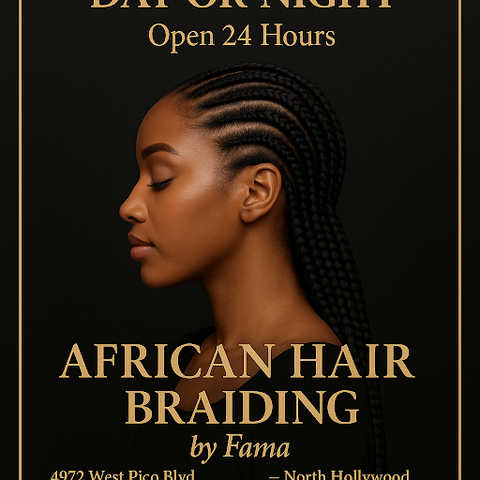

Weave vs Flat Twists in Pico-Robertson: Which Suits Your Hair Texture?
By African Hair Braiding by Fama | November 19, 2026
I hear this a lot: someone comes in after months of protective styling and says their hair was short at first, then they started seeing constant growth once they got consistent with healthy products and low-tension installs. Short answer: choose a weave when you want added length, volume, or a low-daily-styling option, as long as I match your texture and protect your edges. Choose flat twists when you have natural curly or coily hair and you want a lower-tension style that keeps your scalp easy to reach, is easier to wash, and helps preserve your curl pattern. I’m in Los Angeles in the Pico-Robertson corridor, and in this post I’ll break down texture fit, tension and edge care, maintenance, and which service to book in my shop if you want it done clean and secure.
The real reason people choose protective styles on Pico and La Cienega
Most people who find me aren’t looking for “hair theory.” They’re trying to solve a real-life problem: you need a style that stays neat while you’re running kids around, commuting between Westside destinations and Miracle Mile visits, or working long days and not trying to do your hair every morning.
That’s where weaves, flat twists, and braid foundations come in. They’re meant to save time, keep your natural hair protected, and help you stay consistent with moisture and scalp care. And in Los Angeles, especially in mild November weather, humidity shifts can sneak up on you. A style that looks perfect in the morning can start to frizz by dinner if your routine isn’t right for your texture.
Weave vs flat twists: the texture and tension check I do first
When a weave makes sense
A weave is usually the better pick when you want obvious length and fullness, or you want to keep your natural hair tucked away with minimal hot work. If your hairline is delicate, I pay extra attention to track placement and braid size around your edges. That’s where installs go wrong when someone tries to make it “too tight” for longevity.
When flat twists are the smarter move
Flat twists on natural hair are a go-to when you want a protective style that’s gentler and scalp-accessible. They’re great on curly and coily textures because they protect the curl pattern instead of fighting it. They also make wash day easier than a traditional sew-in, since you can cleanse your scalp more directly without dealing with tracks and weft layering.
Quick edge rule: If you’ve had thinning around the hairline before, I’ll steer you toward lower-tension parting, softer perimeter braids, and styles that don’t pull at the same spot every day.
All the weave and twist options I do here (and who each one is for)
If you’re deciding between a weave, flat twists, or a base service like a braid down, this section helps you book with confidence. People come in with pictures, and I take that seriously. I want you to walk out with what you asked for, not “something similar.”
Full Weave
I install a full curly weave with no leave-out for fullness and length, and I keep hot work minimal so your natural hair stays protected. You get big, natural-looking volume without having to blend daily.
Best for: full coverage, maximum volume, and low daily styling. (Up to 3 bundles; hair not provided.)
Full Weave With Leave Out
This is for the person who wants that realistic part and movement. I leave a portion of your natural hair out to cover tracks, then blend it clean so the finish looks natural in photos and in real life.
Best for: versatile parts and ponytails if your leave-out can handle gentle blending.
Full Sew-In Weave
I do a full sew-in weave for a secure protective style you can live in. Depending on your goal, I can do it with no leave-out or finish it with a bonded ponytail.
Best for: a secure install that holds up well when you’re busy and don’t want daily manipulation.
Wig Install
I braid your hair into a V or U part foundation and sew your wig on for a secure, comfortable finish. This is not a lace wig installation. It’s a clean sew-on method that stays put.
Best for: people who already own a wig and want it installed securely for daily wear.
Braid Down Foundation
If you’re doing crochet at home or you’re coming back for an install, this is the base that makes everything look smoother and feel better. I focus on clean, even braiding so your foundation lays flat.
Best for: a secure base for crochet, sew-ins, or wig installs. (Add $20 for detangling and blow dry.)
Track Extensions
For quick fullness, I can do glued-in tracks that blend naturally. It’s fast and gives instant volume.
Best for: a quicker add-on for fullness when you’re not ready for a full sew-in. (Price includes 3 glued-in tracks or a row of 10 to 12 tape-ins.)
Tracking / Single Track Sew-In
This is a discreet, lightweight option when you want extension hair without bulk. I sew each track onto a small braid so it sits clean and “no-show.”
Best for: fullness in key areas while keeping your head feeling light. (Includes 3 tracks; hair not provided.)
Microlinks Extensions
Microlinks are great when you want added volume and length with a lightweight feel and natural blend. I add them to a specific area, not the full head, so it stays comfortable and believable.
Best for: targeted fullness without committing to a full install. (Covers 2 to 3 rows; additional rows extra; hair not provided.)
Weave Maintenance
If your weave needs a reset, I’ll shampoo, condition, and repair loose tracks so it looks fresh again. Maintenance matters if you want your install to last without putting stress on your natural hair.
Best for: keeping an install clean and secure. (Repairs loose tracks within the first 3 to 5 weeks of installation.)
Flat Twists On Natural Hair
I twist your natural hair down in a neat pattern that protects while still showing your texture. Flat twists can be worn simple and sleek or styled into updos.
Best for: lower-tension protection, easy scalp access, and keeping your natural curl pattern happy.
If you want to see more of my weave work specifically, read our weave services in Pico-Robertson and you’ll get a clearer idea of what to book.
Results people talk about: neat work, fast hands, and styles that last
The patterns I see are pretty consistent. People notice the neatness right away, and they talk about how dependable the timing is. I’ve had clients tell me their cornrows and braids come out perfect, that the grip is good, and that we work fast without getting sloppy.
Longevity comes up a lot too. One parent told me she was shocked at how good her daughter’s hair still looked after five weeks. And for twist styles, compliments are a real thing. When the parting is clean and the finish is neat, people notice it the same day you leave.
“Their braids really stand the test of time, they are also fast and dependable. I am shocked at how good my daughter’s hair still looks after getting it braided 5 weeks ago”
One of our regulars
What happens when you sit in my chair (no guessing, no rushing)
When you sit down, the first thing I do is look at your hairline, density, and what your hair has been through lately. Then we talk about the look you want, and I’ll be honest if the picture you brought needs a different base or a different method to protect your edges.
If we’re doing a weave or wig install, I start with clean parting and a foundation that lays flat. For flat twists, I focus on tension control so your twists look neat without feeling like they’re pulling. Before you leave, I’ll tell you exactly what to do at home: how to wrap at night, how often to moisturize, and what to avoid so the style stays fresh.
Los Angeles tip: When November humidity shifts, lightweight leave-in moisturizers and a consistent protective-night routine usually keep frizz down better than heavy oils.
Longevity and wash day: weave maintenance vs flat twist upkeep
Keeping a weave clean without loosening tracks
With a weave, you can wash, but you want to be smart about it. Focus on your scalp, use controlled water pressure, and dry thoroughly so you don’t get that “damp braid” feeling sitting under your tracks. If a track starts lifting, don’t keep tugging it back into place. That’s how edges get stressed. Book Weave Maintenance so I can shampoo, condition, and handle repairs the right way.
Flat twists and wash day
Flat twists tend to be easier for regular cleansing because your scalp is more accessible. If you’re active, that matters. You still want to protect the twist pattern at night and moisturize consistently so your hair doesn’t dry out inside the twist. If your goal is to keep your curl pattern looking good when you take the style down, this is often the better option.
Why people drive in from Beverly Hills to Koreatown for texture-aware braiding
I’ve been doing this work for 14 years, and I’m proud of the repeat relationships. I have people who’ve been coming for years because they know I pay attention to details, and because the shop stays clean and professional. Clients mention the warm vibe, the culture, and the music, but they also talk about something that matters just as much: the work is consistent.
People come to me from West Hollywood, Beverly Hills, Culver City, Hollywood, Inglewood, and Koreatown because they want neat results, good grip, and a team that works fast without cutting corners. If you’ve had a style you didn’t love before, I also take feedback seriously. I’ve redone hair when someone expressed disappointment, and I’d rather fix it than leave you unhappy.
Ready to pick the right service? Call +13235038236 and tell me two things: the look you want (a photo helps) and how your edges have been doing lately. I’ll point you to the right option, whether that’s flat twists, a braid down foundation, or a full sew-in.
Visit us: 4972 West Pico Boulevard #210, Los Angeles, California 90019 | Email: fatousalonllc@gmail.com
Hybrid styles I love: front flat twists plus weave for low-tension blending
If you’re stuck between wanting a protective base and wanting length, a hybrid approach can be the sweet spot. I’ll often recommend flat twists in the front or around the perimeter for a softer hairline, then build your weave or install behind it for fullness. It keeps tension lower where it matters most, and it blends beautifully when you want that “natural but done” finish for photos, events, or holiday plans.
