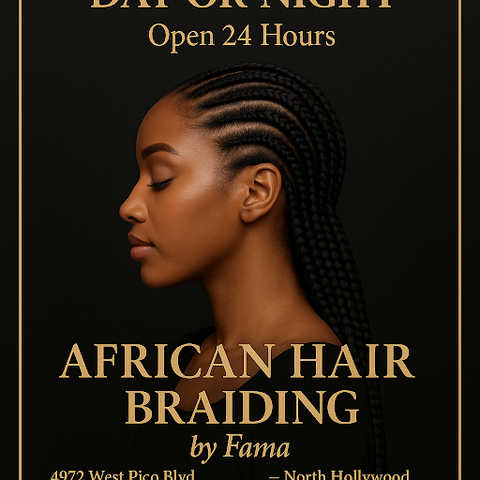

Crochet Hair Installation: From Foundation to Finished Style
By African Hair Braiding by Fama | November 22, 2026
4972 West Pico Boulevard #210, Los Angeles, California 90019 | Call: +13235038236 | Email: fatousalonllc@gmail.com
I hear this a lot: your hair was short at first, you’re particular about the details, and you want a style that looks right and still supports healthy growth. A crochet hair installation starts with a quick consult and hair prep, then I build a secure foundation (usually cornrows, sometimes a cap-based foundation), crochet the hair in, trim and blend it, and finish with styling. If you’re looking to install crochet hair in Los Angeles, especially around Pico-Robertson, this guide breaks down the steps, typical timing, and the aftercare that keeps your style looking fresh.
Why crochet hair is the go-to “2 hours, I’m done” protective style
Crochet hair is for people who want a protective style with real payoff: coverage, fullness, and a natural look without sitting forever. A lot of my Westside professionals and parents come in because they need something that holds up through commutes, errands, and weekend plans, but still looks neat up close.
It’s also a smart option if you have thick hair and you’re not trying to spend half your day in a chair. With crochet, the speed comes from the method. I braid your base, then attach the extensions by looping them into the foundation. You get that “finished” look fast, and your natural hair stays tucked away.
Quick clarity: Crochet is different from traditional individual braids. Most of the time, the foundation is braids underneath, and the “style you see” is crocheted in on top.
Crochet services I do in Pico-Robertson (and who each one fits)
If you’re deciding between a full crochet install and maintenance for locs, this section will save you time. These are the crochet services I do most often, and the “best for” notes are based on what I see work in real life, especially for thick hair and busy schedules.
Crochet Root Maintenance (80 Locs)
I use a crochet tool to instantly lock the new growth at the root so your locs look clean again without switching you into interlocking. It’s a quick refresh that tightens up the base and brings back that neat look.
Best for: Around 80 locs and you want a tidy root area fast, with a method that’s not interlocking.
Crochet Root Maintenance (100 Locs)
This is the same crochet-root approach, just set up for a fuller loc count. I focus on keeping the roots defined and uniform so your locs look polished again without a heavy, stiff feel.
Best for: About 100 locs and you want your new growth locked in neatly, without interlocking.
Crochet Root Maintenance (150 Locs)
When you have more locs, the goal is still the same: refresh the roots and keep everything consistent. I work section-by-section so the finish looks even, not patchy.
Best for: Fuller heads of locs that need a clean root refresh and a uniform look.
Crochet Root Maintenance (200 Locs)
Dense locs can still get a crisp root finish. I use the crochet tool to lock in new growth efficiently while keeping the roots defined so your locs look maintained, not overworked.
Best for: Around 200 locs and you want clean, defined roots without changing to interlocking.
Crotchet Installation
This is my fast crochet hair install using pre-looped hair. After I braid your foundation, I crochet the loops in, then I shape the cut and make sure it lays right so it looks natural, not bulky.
Best for: You want full volume fast. This is the one people choose when they don’t have patience for long braid appointments.
Crochet Installation with Loose Hair
If you want more control over the finished look, I crochet loose hair into the foundation and build the style as I go. This gives you a softer, more customized finish, especially around the part and hairline.
Best for: You’re particular about how the hair falls and you want flexibility in length, fullness, and parting.
If you’re deciding between methods, I also keep an updated post on crochet services in Pico-Robertson that helps you match the look you want to the right install.
The results people mention most: neat work, fast hands, styles that last
The biggest pattern I hear is consistency. People tell me they’re happy with their style “each and every time, ” and they keep coming back because the work holds up. I also get a lot of love for speed. One parent was shocked their daughter’s hair still looked good after 5 weeks, and that’s exactly the point of doing the foundation right.
And yes, compliments are real. When a twist or crochet style is neat, it gets noticed immediately. That’s why I take my time on the details that show, like the parting, the hairline area, and the way the hair lays so it doesn’t scream “installed.”
“Their braids really stand the test of time, they are also fast and dependable. I am shocked at how good my daughter’s hair still looks after getting it braided 5 weeks ago”
one of our regulars
I also take feedback seriously. If something feels off, I’d rather fix it than have you leave unhappy. People remember that, and it’s part of why so many clients describe us as dependable.
How I install crochet hair, step by step (foundation to finishing)
When you sit down, I start by looking at your hair and talking through the look. Then we prep. If you’re coming in with thick hair, this part matters because it sets the tone for the whole install.
1) Prep and base: wash, detangle, braid
I wash and comb through, then I braid a foundation that’s secure but not aggressive. Most crochet installs start with cornrows because they distribute tension better than trying to grip in one spot.
2) Crochet method: loop-in for speed and clean lay
I use a crochet tool to pull hair through the braid, then I secure it. Pre-looped hair moves faster. Loose hair gives more control over the final shape and how natural it looks around the part.
3) Finish work: trim, blend, and style
This is where your style stops looking “installed” and starts looking like you. I’ll trim for face shape, check symmetry, and make sure it’s not bulky at the root.
Keeping crochet hair fresh in Los Angeles: wash, scalp care, and frizz control
Los Angeles weather is a mix. Dry summer air, mild winters, and plenty of days where your scalp just needs attention. Crochet styles last longer when you take care of the foundation underneath, not just the hair you see.
- Focus on your scalp. Use a gentle cleanser and rinse well. Build-up is what makes a style start feeling itchy and heavy.
- Don’t soak it every other day. Most people do better with a light wash schedule and a quick dry routine so the base doesn’t stay damp.
- Sleep protection matters. A bonnet or scarf keeps frizz down and helps the crochet hair lay neatly longer.
- If you feel pulling at the edges, tell me. Edges don’t need to be tight to look clean.
My rule: If your crochet style looks great but your scalp feels miserable, it’s not a win. Comfort and neatness should come together.
Why people stay with me for years: speed, detail, and a clean shop
I’ve been doing hair for 14 years, and I don’t take loyalty lightly. People tell me they’ve been coming for 5 years, 11 years, and beyond. That happens when you’re consistent and you respect people’s time.
I also keep the space clean. Clients notice spotless stations and sanitized tools. And the vibe matters too. A lot of people say the culture, music, and warmth make it feel like home, not like you’re sitting in a silent room getting rushed.
If you’re coming from West Hollywood, Beverly Hills, Culver City, Hollywood, Inglewood, or Koreatown: I’m in the Pico-Robertson area and I keep scheduling options that fit real life, including early mornings, evenings, and weekends when I have them available.
If you’re ready, call with two things: a photo of the look you want and a quick note on your natural hair (length, thickness, and if you’re tender-headed). I’ll point you to the right crochet install so you don’t overbook, underbook, or end up with the wrong hair.
FAQs about crochet hair installs, crochet locs, and crochet braids
What is the difference between crochet hair and traditional braids?
Traditional braids are usually individual braids added throughout your hair. Crochet hair starts with a braided foundation underneath, then I attach the hair by looping it into that base with a crochet tool. Crochet is often faster, and it gives you a lot of volume without braiding every strand individually.
How long does a crochet hair installation usually take?
Timing depends on the foundation, the hair you choose, and how much fullness you want. Some clients come in specifically because they don’t want to sit more than about 2 hours, and crochet is one of the best options for that kind of timeframe.
How should I prepare my natural hair before a crochet install?
Come with your hair ready to be washed and detangled, or plan for me to handle that during the appointment. If you have heavy product build-up, let me know ahead of time so I can plan enough time for a thorough cleanse and comb-out. And if you’re tender-headed, say it early, so I can braid your foundation comfortably.
How do I wash and care for crochet hair so it lasts longer?
Treat it like a style with a scalp underneath that still needs care. Clean your scalp gently, rinse well, and make sure the base dries fully. Keep frizz down with nighttime protection, and don’t overload the hair with heavy oils that attract dust and build-up.
Will crochet hair damage my edges or natural hair?
Crochet shouldn’t be edge-damaging when the foundation is braided with care and the install isn’t pulling at the hairline. I pay close attention to tension, especially around the edges. If you ever feel pulling or soreness, tell me right away so I can adjust it.
What is a crochet locs install?
A crochet locs install uses a crochet tool to secure locs or to tighten and refresh new growth at the roots, depending on what you’re coming in for. If you already have locs and your roots need to look clean again, crochet root maintenance is a quick way to lock in new growth and tidy the base.
How do you install crochet braids?
I start by washing and detangling, then I braid a solid foundation, usually cornrows. After that, I use a crochet tool to loop the hair through the braids and secure it. The last step is shaping: trimming, blending, and styling so the hair lays naturally and matches the look you came in for.
